Selective Androgen Receptor Modulators are a wide variety of compounds that activate the AR (Androgen Receptor) for anabolic and androgenic functionality. They are particularly useful in medicine as an alternative to steroids with hopes of less side effects.
The most widely used are in the arylpropionamide family of SARMs bearing an aromatic cyclohexane ring attached to a propanamide with substitution at the ring. Many active SARMs used pharmacologically have this base present in the structure such as Andarine, Ostarine, et al.

I will list and describe the various syntheses of pharmacologically useful SARMs.
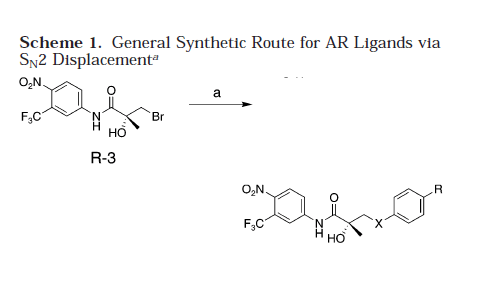
The most common synthetic route to arylpropionamide SARMs starts with a bromine-arylpropionamide precursor (starting material). This halogen bearing precursor when refluxed with the right reagent in solvent undergoes a debromination and subsequent chemical attachment.
Shown below is a diagram from the Journal of Medicinal Chemistry:

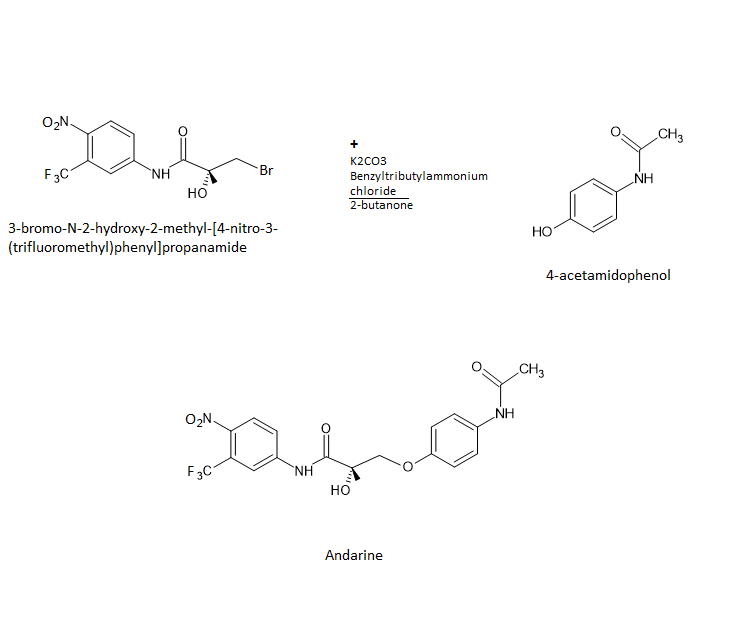
Andarine:
This chemical reaction proceeds with a mixture of Potassium Carbonate, benzyltributylammonium chloride, 4-acetamidophenol, and the aryl-propionamide starting material shown in scheme 1 refluxed in 2-butanone for a specific amount of time.
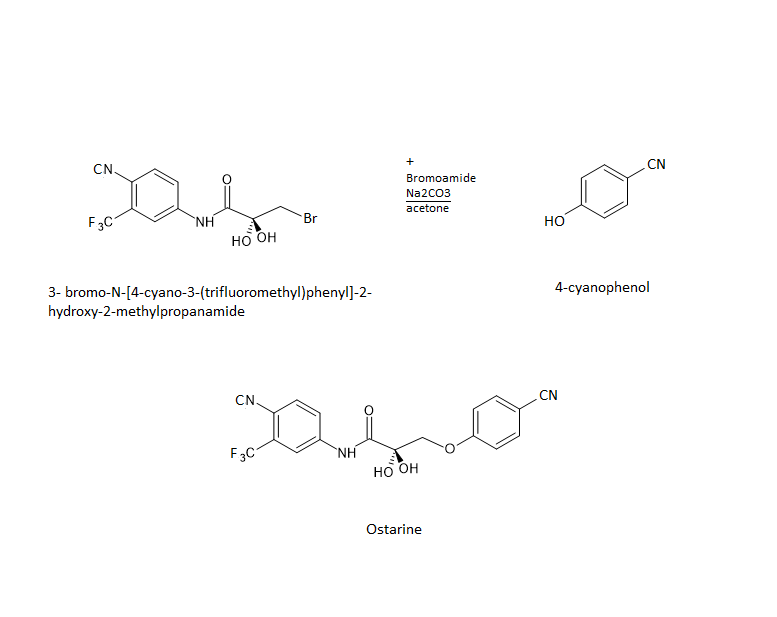
Ostarine:
A similar process but with different reagents and starting material. Proceeding via a mixture of bromoamide, an arylpropionamide derivative, sodium carbonate, and 4-cyanophenol in acetone.

LGD-4033:
The following images are displayed in a 2012 patent assigned to Ligand Pharmaceuticals Inc.

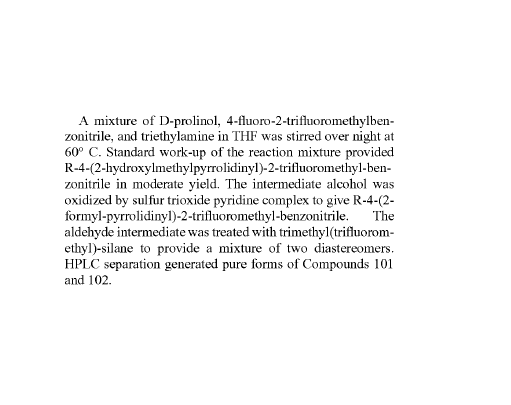
Shown below is a graph depicting a synthetic route to LGD-4033:

RAD140:

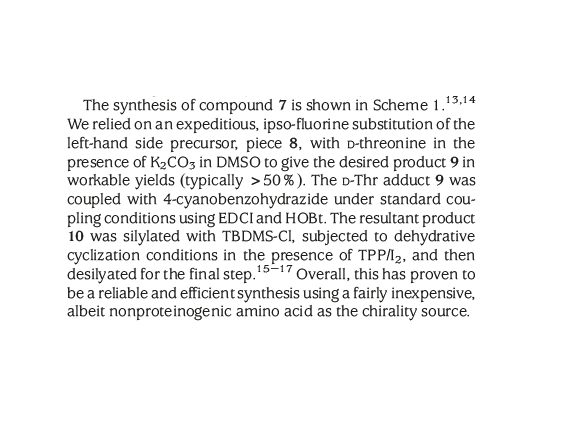
This synthesis is thoroughly described in the literature and as such I will not be going into detail anymore than what is available. These excerpts are from a 2011 publication in ACS Medicinal Chemistry Letters.
References:
Design, Synthesis, and Biological Characterization of Metabolically Stable
Selective Androgen Receptor Modulators. J. Med. Chem. 2004, 47, 993-998
US Patent 8748633
Design, Synthesis, and Preclinical Characterization of the
Selective Androgen Receptor Modulator (SARM) RAD140. ACS Med. Chem. Lett. 2011, 2, 2, 124–129
Leave a Reply